Stephen Rowe Bradley did not just build a house in Walpole. He brought a massive political legacy. When he crossed the Connecticut River from Vermont in 1818, he was already a giant of early American democracy. He served as one of Vermont's first US senators. He changed how we elect presidents. After the chaotic 1800 Electoral College tie between Thomas Jefferson and Aaron Burr, Bradley literally drafted the Twelfth Amendment. He wanted to prevent another national crisis. But by 1818, he wanted out of Vermont politics, so he bought this Walpole property to live out his sunset years.
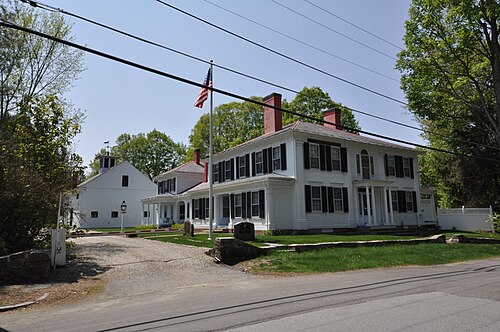
The house itself sits on Westminster Street. It is not flashy. Local builders finished the two-and-a-half-story wooden structure around 1808, just a decade before Bradley moved in. It features a classic hip roof and a symmetrical five-bay facade. Look at the front door. An elegant semi-elliptical fanlight sits right above the entrance, which was a major status symbol in the early republic. Inside, Bradley accumulated a massive library. Actually, his collection of books and legal papers was one of the largest in New England at the time.
Walpole wasn't a sleepy village then. It bustled with lawyers and writers. So, Bradley's parlor naturally became a regular meeting spot for regional elites who wanted to pick the brain of a retired Senate powerhouse. He died in the house in 1830. The National Register added the site in 2005. It remains a private residence. Today, though, the building stands as a physical anchor to the messy, experimental years when a young nation was still figuring out how to govern itself.