In 1917, Chicago's West Side got something wild. The Central Park Theater opened its doors on Roosevelt Road. It sat nearly 1,800 people. Architects Rapp & Rapp designed it for the Balaban & Katz theater chain, setting a brand new standard for luxury. This wasn't just another cheap nickelodeon. Actually, it was the world's very first true movie palace. Before this place opened, summer cinema meant sweating in a stuffy, dark room. But the Central Park changed that. They rigged up a crude mechanical air-cooling system using giant blocks of ice and fans. It worked. Chicagoans sweltering in the July heat bought tickets just to feel the breeze.
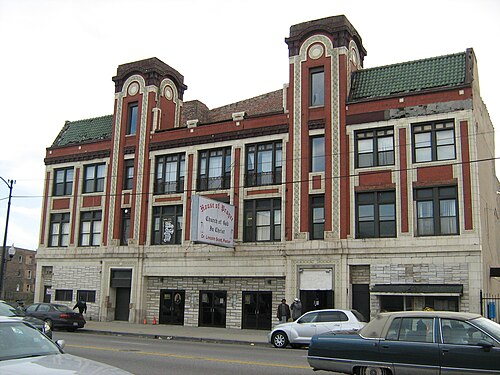
By the 1950s, the surrounding North Lawndale neighborhood was changing rapidly. The theater struggled. It finally closed its doors as a cinema in 1971. But it didn't face the wrecking ball like so many of its downtown cousins. Instead, a savior stepped in. The congregation of the House of Prayer Church of God in Christ bought the massive brick structure. They turned the auditorium into a sanctuary. Pastor Shelvin Hall kept the rain out and the boilers running. That preserved it. Without their care, the plaster ornament and towering lobby would have crumbled decades ago.
In 2005, the federal government officially recognized this survival story by adding the theater to the National Register of Historic Places. It deserved the nod. This single building served as the direct prototype for iconic giants like the Chicago Theatre and the Uptown. Rapp & Rapp tested their ideas here first. They perfected the grand lobbies and Spanish-inspired terra cotta details before taking them nationwide. Today, the plaster is peeling. Water damage has taken a toll. But the bones of the Central Park remain a defiant monument to the birth of modern show business.




.jpg)