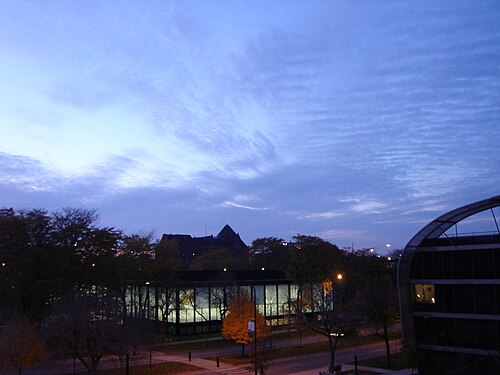
In 1938, Ludwig Mies van der Rohe arrived in Chicago. He took the job. Then, he rebuilt the entire architecture school from the dirt up. Mies laid out a 120-acre grid of steel and glass on the South Side. No gothic spires. He wanted his buildings to look like the factories that powered the city. They did. Traditionalists called the stark buildings cold and soulless. But Mies didn't care. Today, twenty of his structures still stand on the campus, forming the ultimate modernist playground.
S.R. Crown Hall stands as the masterpiece of the entire group. It houses the College of Architecture. Look closely at how he engineered it. He hung the entire ceiling from four massive steel plate girders that span the roof externally. This trick eliminated all interior columns. You get a single, massive room measuring 220 by 120 feet. He called it "universal space." Inside, students draft blueprints on wooden desks with nothing but glass walls separating them from the Chicago oak trees outside. It is pure minimalism. But it works because the proportions are so exact. Mies actually spent weeks adjusting the spacing of the steel window frames by fractions of an inch.
The campus has a complicated past, though. To build this modernist mecca, the city flattened blocks of Bronzeville, a historic Black neighborhood. This displacement left scars. Local residents lost their homes, jazz clubs, and churches to the wrecking ball. It carried a steep human cost. When the federal government put the campus on the National Register in 2005, they recognized both sides of this coin. They preserved the buildings. But they also locked in a physical record of Chicago's mid-century urban renewal policies. It remains a pilgrimage site. Walk down State Street today and you can still hear the elevated trains roar right past Mies's quiet glass boxes.
What Makes Illinois Institute of Technology Academic Campus Special:
Illinois Institute of Technology Academic Campus Location Map: