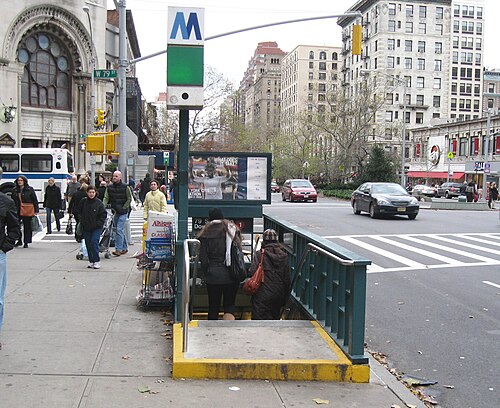
The city screamed with noise. On October 27, 1904, Mayor George McClellan grabbed the controls of the very first Interborough Rapid Transit train, hurtling past cheering crowds down a brand-new subterranean spine. The 79th Street station was ready for them. Italian stonecutters and Irish laborers had spent years digging up Broadway, hacking through tough Manhattan schist with dynamite and shovels to build the line. All for a nickel fare. They used the cut-and-cover method, which meant the street above became a gaping, muddy canyon before workers finally patched it over with steel beams.
Nobody wanted the subway to feel like a damp sewer. Architects George Lewis Heins and Christopher Grant LaFarge designed the space to feel like an underground gallery, choosing glazed ceramic decorations to catch the dim electric light. It worked. The Boston-based Grueby Faience Company baked the station's signature blue and cream terracotta plaques, each featuring a stylized, bulky "79" framed by Renaissance-style scrolls. These details survived decades of grime and neglect. Even today, after countless coats of cheap transit-authority paint, you can still touch the original tiles that Edwardian commuters brushed past on their way to work.
Fast forward a century. The federal government finally recognized this subterranean survivor in 2004, slapping it onto the National Register of Historic Places just as it turned one hundred years old. This designation was not some empty honorary gesture. It protected the remaining structural bones, like the cast-iron columns and the vaulted ceilings, from being bulldozed by modernization efforts. Water leaks still drip. Brakes squeal and screech as the 1 train rumbles through, but the station remains a living museum, still doing the exact same heavy lifting it did during the Roosevelt administration.
What Makes 79th Street Subway Station (IRT) Special: