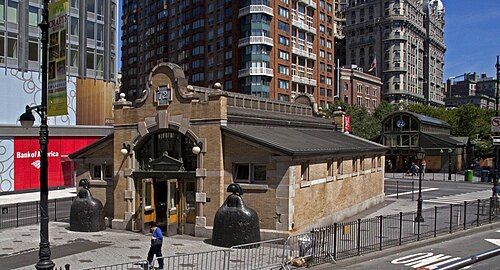
When the Interborough Rapid Transit company opened its first line in October 1904, the 72nd Street station stood out immediately. Most subway stops hid quietly underground, but this one sat proudly on the surface. Architects Heins & LaFarge designed a gorgeous, Flemish Renaissance-style control house right on the Broadway traffic island. A beautiful mix of red brick, limestone, and heavy cast-iron. It was pretty. But it was also a massive bottleneck. The original design squeezed thousands of Upper West Side commuters onto platform ledges that were only twelve feet wide. Speeding express trains roared by just inches from passengers' shoulders.
For nearly a century, commuters endured this daily hazard. It was terrifying during rush hour. People regularly got pushed dangerously close to the tracks because the stairwells blocked the middle of the already narrow platforms. So, the city finally had to act. In 2002, a massive ninety-million-dollar renovation project wrapped up, adding a second, modern glass-and-steel headhouse just to the south and finally widening those dangerously tight platforms. They didn't tear down the old 1904 brick house, though. Preservationists fought for it. Today, it remains one of the very few original IRT control houses left in New York. The 2004 National Register listing proved they were right.
What Makes 72nd Street Subway Station (IRT) Special:




.jpg)