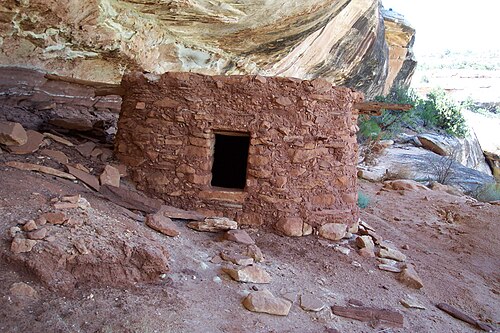
They came for the water. Around 500 BC, Basketmaker II groups started farming the mesas, planting maize and squash in the thin soil while still hunting bighorn sheep. They built shallow pit houses first. Later, their descendants, the Ancestral Puebloans, moved into the deep sandstone canyons, leaving behind masonry cliff dwellings like Horse Collar Ruin. Over two hundred documented sites. This district isn't just a graveyard of empty stone walls it is a physical record of how people adapted to a dry, harsh environment over nearly two millennia.
The desert air preserves things perfectly. Archaeologists have pulled intact yucca-fiber sandals, desiccated corn cobs, and delicate turkey-feather blankets out of the dry alcoves. These aren't just random relics. They show a clear shift from nomadic hunting to intensive agriculture, a transition that forced these communities to engineer clever water-storage systems. Then, they suddenly left. By the late 1200s, a massive drought likely drove the farmers south toward the Rio Grande and Hopi mesas, abandoning their handiwork to the wind.
Walk down into White Canyon. You will spot handprints stamped in red ochre on the alcove walls, alongside carved spirals and humped-back flute players. This is public land now. The 2004 National Register listing protects these fragile spaces from looters who spent a century digging up graves and stealing pots. Actually, it keeps the context intact. Without that context, a painted pot is just a pretty object, but left in the dirt of Natural Bridges, it explains how humans survived where we now only hike.
What Makes Natural Bridges Archeological District Special: