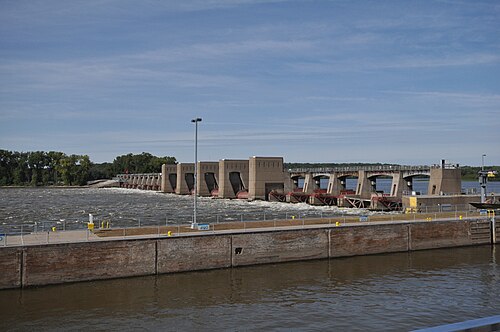
The Great Depression hit Muscatine hard. Then, in 1937, the U.S. Army Corps of Engineers completed a massive concrete gateway to tame the wild Mississippi. They called it Lock and Dam No. 16. The project relied on raw, heavy engineering and desperate human sweat. Hundreds of local laborers dug out the riverbed, earning pennies to pour tons of wet concrete. They built a massive 110-by-600-foot lock chamber alongside a dam featuring four steel roller gates and fifteen Tainter gates. It tamed the river. Before this, the Mississippi was a fickle beast, constantly drying up or flooding out commercial wood-hulled barges. This project turned the river into a reliable, stepped highway for grain and coal.
Walk up to the site today and you will spot something surprising. The brick control buildings look almost stylish. Architects actually used Art Deco details, like cast-stone trim and geometric pilasters, on these utilitarian workspaces. A bit fancy for a place where grease-covered workers cranked open heavy valves. But that was the 1930s style. The district earned its spot on the National Register in 2004. It represents a major turning point in American transportation. It kept the Midwest connected. Without this specific lock, the modern barge industry in Iowa simply would not exist.
What Makes Lock and Dam No. 16 Historic District Special: