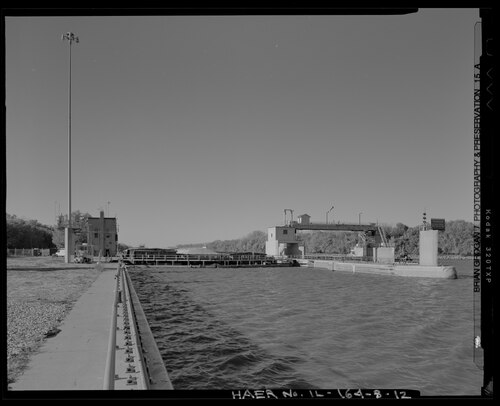
Congress wanted a nine-foot shipping channel. They got it in 1939. The U.S. Army Corps of Engineers built the Peoria Lock and Dam to tame the Illinois River, turning a temperamental waterway into a predictable industrial highway. Workers poured tons of concrete and wrestled heavy steel right at the edge of Tazewell County. This wasn't just about moving water. It connected the Great Lakes directly to the Gulf of Mexico. Before this, shallow spots regularly grounded commercial barges for weeks at a time. The new system solved that bottleneck. Soon, massive towboats pushed coal, grain, and petroleum through a 110-by-600-foot lock chamber without scraping the muddy river bottom.
But the real magic lay in the dam's design, which didn't use a standard concrete wall. The engineers installed a Chanoine wicket dam. It used 130 massive wooden shutters. When the river ran high, workers physically lowered these wickets flat against the riverbed. Boats just sailed right over them. During low water, though, a specialized maneuver boat crew had to hook each heavy timber wicket and pull it upright against the rushing current. It was dangerous, bone-jarring work. The brick control station, built in a stripped-down Classical Revival style, still stands on the Tazewell side of the river. It housed the machinery that kept this mechanical dance synchronized.
Today, the district represents a preserved slice of New Deal-era grit. It joined the National Register of Historic Places in 2004 because it captured a turning point in American civil engineering. Most people driving over the nearby Shade-Lohmann Bridge don't even look down at the site. But they should. Those concrete walls and iron gears represent the backbone of Midwestern commerce. It is a working monument to the days when we literally rebuilt the nation's plumbing to keep the economy afloat.
What Makes Peoria Lock and Dam Historic District Special: