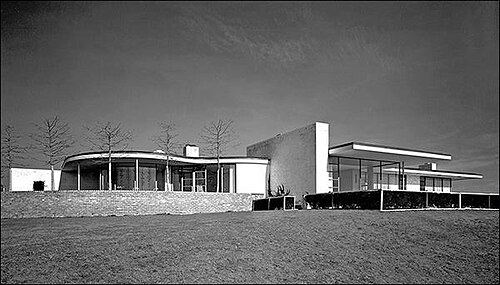
A. Conger Goodyear had money. He got rich off Southern lumber, but modern art was his real obsession. So he hired Edward Durell Stone. Stone was then co-designing the new MoMA building in Manhattan, making him the perfect candidate to draft a radical residential statement on a hilly, oak-lined lot in Nassau County. The result shocked the neighbors. While nearby Gilded Age robber barons built stuffy Neo-Georgian brick fortresses, Goodyear got a sleek, low-slung pavilion of glass, steel, and redwood.
The design was brilliantly functional. Stone engineered a massive, overhanging flat roof that blocked the blazing summer sun while letting low winter light warm the flagstone floors. Inside, a 130-foot gallery displayed Goodyear's massive art collection, which featured giants like Picasso, Lger, and Gauguin. Glass walls dissolved the boundaries. Actually, the house almost didn't make it to the National Register. In 2001, a developer bought the property for $3.4 million with plans to bulldoze the masterpiece and carve up the land for giant McMansions. Preservationists went wild. The World Monuments Fund bought it back, placed protective easements on the structure, and eventually sold it to a buyer who restored the original details.