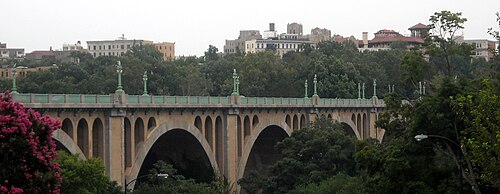
People call it the Taft Bridge now. But back when construction started in 1897, Washingtonians just knew it as the massive concrete span pushing Connecticut Avenue across the gaping maw of Rock Creek. Engineer George S. Morison designed it. He opted for unreinforced concrete, a radical and frankly terrifying choice for a bridge of this scale. Morison died before they finished it. So, Edward Pearce Casey took over, pushing the project to its 1907 completion. Workers mixed and poured over 1.5 million cubic feet of concrete by hand, working day and night. No rebar. Just sheer gravity holding up a thousand feet of roadway, seventy feet above the valley floor. It cost $850,000.
To make the giant slab look classy, workers bush-hammered the concrete to mimic natural stone. It worked. Then came the lions. Sculptor Roland Hinton Perry created four massive, sleepy-looking concrete beasts to guard the approaches. Local kids used to climb them. Actually, they still do. By the 1960s, the original lions had decayed so badly from acid rain and exhaust fumes that the city had to replace them with cast-iron replicas. City workers eventually restored the concrete originals. More than just an art project, this bridge literally carved out modern Northwest D.C. Before the span, Cleveland Park was mostly farmland. The bridge changed everything. Streetcars rattled across the gorge, carrying developers who quickly chopped up old estates into suburban tracts. It made the suburbs happen.