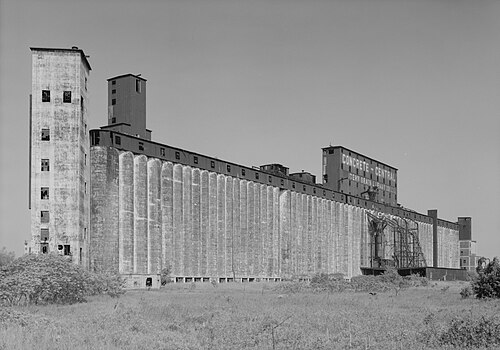
It sits like a decaying gray battleship along the Buffalo River. Massive. Actually, it stretches almost a thousand feet. When builders poured the concrete between 1915 and 1917, they created the largest grain transfer facility on earth. At its peak, workers stuffed four and a half million bushels of grain into its 268 soaring cylinders. Buffalo ruled the global grain trade back then, and this giant kept the crown secured. Trains and lake freighters met here. They swapped cargo at breakneck speed.
Before this, grain elevators regularly exploded or burned to the ground. Grain dust is highly flammable. So, engineers turned to reinforced concrete to stop the fires. They used a slip-form technique, pouring concrete continuously into molds that climbed higher day by day. It worked. But the boom did not last forever. By the mid-20th century, the St. Lawrence Seaway opened, allowing ships to bypass Buffalo entirely. The elevator went dark in 1966.
Today, the ruin just looms. Scrappers stripped the copper and steel decades ago. Now, only the heavy concrete shell remains, covered in decades of colorful graffiti and encroaching weeds. Demolishing a quarter-mile of reinforced concrete costs far too much. So, it sits. The National Register added the site in 2003 to honor Buffalo's old dominance as a gateway for midwestern wheat. It is a dangerous, majestic ghost.




.jpg)