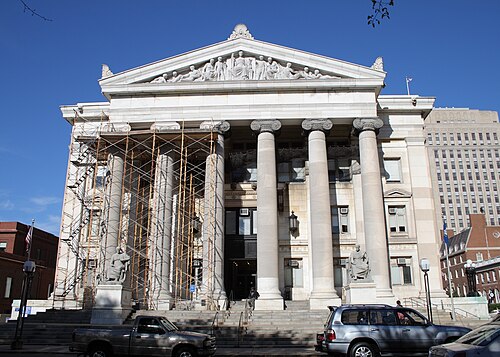
Walk up Elm Street and you cannot miss it. Giant marble columns block the sun. This massive Beaux-Arts beast was completed in 1914 after five years of noisy, expensive construction. Architects William Allen and Richard Williams copied the Cour d'Assises in Paris. It cost over one million dollars. A staggering sum back then. Inside, grand murals depict local history, but the real drama happened in the courtrooms, not on the painted walls.
Take the spring of 1970. The courthouse suddenly became ground zero for a national political explosion during the trials of Black Panther leaders Bobby Seale and Ericka Huggins. The state accused them of ordering the murder of Alex Rackley, a suspected informant. Thousands of protesters flooded the Green. Yale students went on strike while military tanks lined the surrounding streets. A total powder keg. The jury eventually deadlocked, so the judge dismissed the charges, defusing a crisis that had gripped the entire nation.
The building survived the chaos. Today, it still functions as a working courthouse, though it got its official spot on the National Register of Historic Places in 2003. People usually focus on the grand architecture. They miss the point. The real value lies in how those cold marble walls absorbed decades of raw, unfiltered human conflict. Actually, it is a physical reminder of the collision between state power and radical social change.