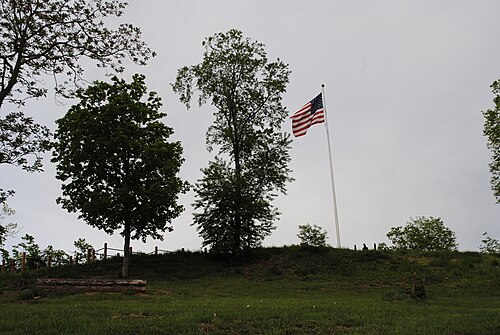
They dug in during 1863. Union soldiers hacked at the clay on Mount Logan, a steep hill looming right where the Little Kanawha River pours into the Ohio. They needed to protect the Baltimore and Ohio Railroad. If the Confederates seized Parkersburg, the Union's western supply lines would choke. So, General Benjamin Kelley ordered a fort built on the overlook. Soldiers cleared the oaks. They threw up triangular earthworks, mounted heavy artillery, and named the muddy compound after Arthur Boreman, the state's brand-new governor. Actually, it was mostly a waiting game. The men spent their days swatting mosquitoes, drilling, and staring down at the steamboat traffic.
No major battles happened here. But that was the entire point. The presence of the big guns deterred Confederate raiders like Jones and Imboden, who desperately wanted to burn the nearby B&O railroad bridge. Had those bridges fallen, Union troop movements would have ground to a halt. Instead, Fort Boreman kept the peace. By 1864, the hilltop resembled a small, chaotic town. It had barracks, a telegraph office, and a brass band that played for the locals. After the war, the army abandoned the trenches. Nature took over. Today, it is a county park, but if you kick the dirt near the overlook, you are standing on the exact spot where Union gunners once watched the river through brass spyglasses, waiting for a rebel attack that never came.