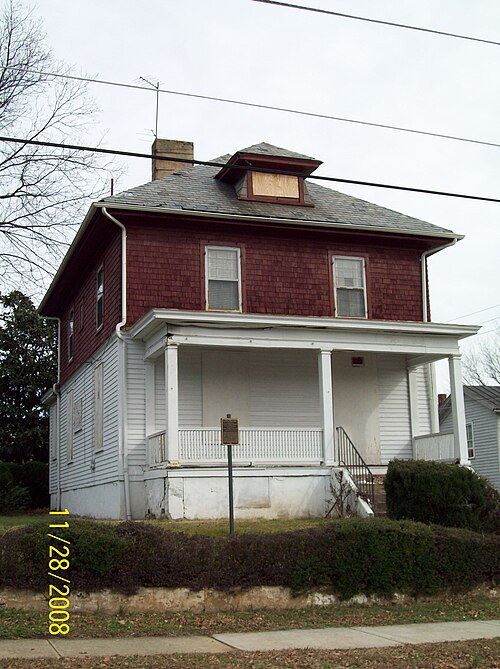
Look at 1422 Pierce Street in Lynchburg. This unassuming house belonged to Dr. Robert Walter "Whirlwind" Johnson, a local physician who single-handedly broke the color barrier in tennis. He did it from his backyard. There, behind his Queen Anne-style home, Johnson built a soft clay tennis court in the 1930s because segregated Virginia barred Black athletes from public courts. The court became a sanctuary. He founded the Junior Development Program of the American Tennis Association right here, turning a private residence into the epicenter of Black tennis in America.
He didn't just teach tennis strokes. He drilled his students in strict etiquette and emotional restraint because he knew hostile white officials would look for any excuse to disqualify them. No racket throwing. No arguing with bad calls. A young Althea Gibson arrived in 1946, raw and fiercely talented. Johnson polished her game and her temper, setting her on the path to eventually win Wimbledon and the U.S. Nationals. Then came Arthur Ashe. Ashe spent his summers on this very clay starting in 1953, sleeping in the upstairs bedrooms and practicing under Johnson's watchful eye until his fingers blistered. The court was their laboratory.
Actually, the property almost fell to ruin after Johnson died in 1971. The clay court grew thick with weeds. But local advocates stepped in to save the site, recognizing that these few hundred square feet of dirt altered global sports history. It was never a wealthy country club. Just a doctor's backyard where kids learned how to beat the system at its own game.
What Makes Johnson, Dr. Robert Walker, House and Tennis Court Special:
Johnson, Dr. Robert Walker, House and Tennis Court Location Map: